Almost everyone buys the wrong quantity first. The mistake is counting rooms instead of counting the walk: one for the hallway, one for the bathroom, one for the stairs, one for the closet, and suddenly a small apartment needs five. Then half fire constantly and the other half never trigger because a door frame is in the way.
Three things decide the number: how far one sensor sees, where the walls turn, and which stretch of floor you walk in the dark.
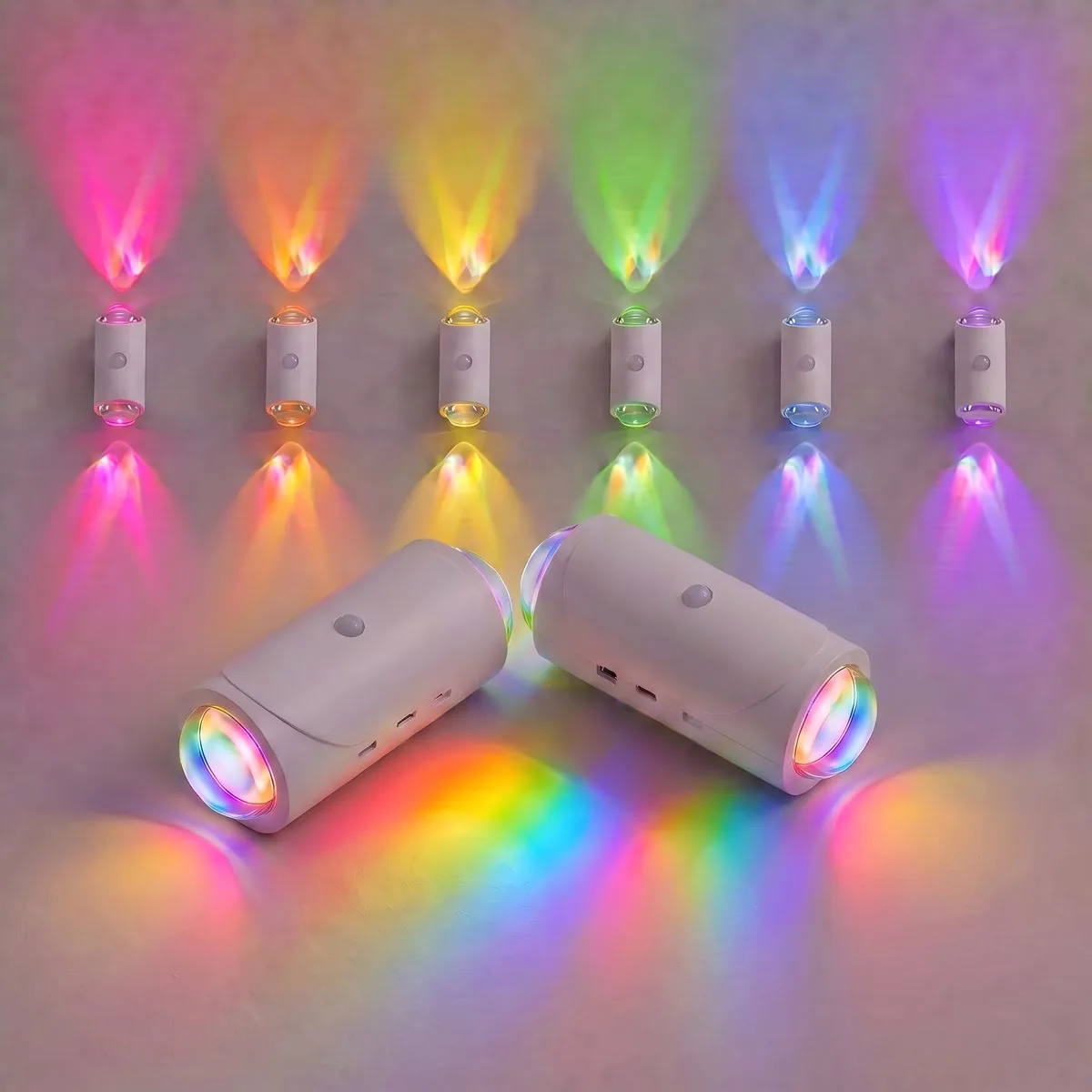
Count the Walk, Not the Rooms
Walk your normal 2 a.m. route once, on foot, and notice where it is genuinely dark. For most people that is a short chain: bed, bedroom door, a stretch of hallway, the bathroom door, the bathroom itself. Every doorway is a decision point, because a sensor cannot see through it.
Straight line with no door in between? You may be a one-light household. One corner, a landing, or two doors? Two or three lights. That is the whole calculation.
How Far One Light Actually Reaches
ZSYZDL's motion lights use a passive infrared sensor rated for about 16 ft with a 120° field of view. In open air that is generous. In a real house it is less, for three reasons:
- Walls and door frames block the cone. The 120° spread only exists in open space. Put the light beside a doorway and the frame cuts off a chunk of it.
- PIR detects movement across the cone, not toward it. Someone walking at the sensor is harder to catch than someone walking past it, so mount it so the path crosses the view.
- Aim matters more than distance. Pointed at the floor it lights the floor; pointed at the far wall it bounces and lights the whole stretch.
In practice, plan one light per 12 to 15 ft of corridor, plus one for each doorway that turns a corner. Closets and stairwells get their own unit: that is where the floor drops out of view.
Shop This Setup
The two-light baseline most apartments land on: one at the hallway turn, one at the bathroom door. Both mount on an adhesive plate — nothing drilled, nothing to undo when you move out.
- The two-light baseline: White 2-Pack Motion Sensor Night Light — two independent lights, each with its own magnetic plate, USB-C port and PIR sensor, so you can place them in different rooms.
- Adding a third spot: No-Drill Motion Sensor Wall Light, White — same light sold singly for the closet or the far end of the hall.
- Dark walls or a rental with black trim: the Black 2-Pack disappears into the wall instead of standing out.
The Three-Light Baseline
Across the homes we hear about most, the useful count is three, and only two of them are non-negotiable:
- Bedside or bedroom door. The first light you reach for. Keeps you from turning on a lamp and waking whoever is still asleep.
- Hallway midpoint or stair top. This is the one that prevents the accident: from the top landing you can see the first and last step, the two people miss.
- Bathroom door or closet interior. Nice to have, and the spot where a cheap plug-in usually fails: the outlet is behind the door, or there is none.
Two lights cover the first two, which is why the 2-pack is the sane default. Buy a third only after you have walked the route and found a real blind spot.
1-Pack, 2-Pack, or Three Singles?
| Buy | Covers | Cost per light | Pick it when |
|---|---|---|---|
| 1-pack | One straight run, one door | Highest | Studio, dorm, or you are testing whether motion light suits you |
| 2-pack | Hallway plus bathroom, or both ends of a corridor | Lower — usually well under two singles | Almost every apartment and one-floor house |
| Third unit | The closet, the far landing, a child's room | Lowest if added as a second 2-pack | Two-storey home, or a long hallway with a corner |
Prices move on Amazon US, so check the live listing — but the ranking does not change: buying two singles when you need two lights is always the expensive choice.
Do Motion Sensor Lights Only Work at Night?
In AUTO mode, yes — deliberately. The light arms itself when the room goes dark, wakes on movement, then fades out. In daylight the sensor stays asleep, which is why a 1,500 mAh battery lasts up to 120 days per charge in AUTO mode instead of a couple of weeks.
If you want light while you are awake in the evening, switch it to always-on rather than waving at it. A light that fires at every daytime movement is how people end up charging weekly.
When Two Is Too Many
More is not automatically better. Skip a second unit if the cones would overlap on the same floor: double triggers, double drain, no extra visibility. Skip it too if the only spot left faces a bed or a doorway with constant traffic, because the light will fire all evening for nothing.
Two habits keep the count honest: mount each light so the walking path crosses its view rather than running away from it, and re-check after a week. A light that fires more than a few times an hour overnight is in the wrong spot, not the wrong mode. Our installation guide covers height and angle; the room-by-room breakdown covers stairwells and closets.
The Short Version
Walk the route once, count the doorways and corners, allow one light per 12 to 15 ft of corridor, and buy for that number on the first order. Most homes land on two, which is exactly what a 2-pack gives you — each light with its own magnetic plate and USB-C port, so the pair can live in two different rooms. Add a third only when you find a spot that is genuinely dark.
Cover the Two Spots You Actually Walk
Magnetic, rechargeable, 16 ft PIR sensing and seven colors — mount in under a minute, no drilling, no wiring.