Most falls at home don't happen on the stairs in broad daylight — they happen at night, in the few dim steps between the bed and the bathroom. As eyes age, they adapt to darkness more slowly, which turns a routine midnight trip into a small hazard every single night. A motion sensor night light removes the two biggest risks in one move: the dark, and the need to search for a switch.
Why Nighttime Is When Falls Happen
Nighttime falls in older adults tend to share the same script: waking up disoriented, getting out of bed in low light, and shuffling toward the bathroom while half asleep. Reaching for a wall switch means finding it first, and turning on a bright overhead light floods the room and destroys the night vision a person needs to see the next step. A soft, automatic light sidesteps all of it — it switches on as soon as it senses movement, gives just enough glow to see the floor, and turns itself off afterward.
What to Look For in a Senior-Friendly Night Light
- Motion-activated. The light should turn on by itself when someone stands or steps into the room — no buttons, no switches, no apps to learn.
- Soft, glare-free light. A gentle warm glow lights the path without blinding a person whose eyes are still adjusted to the dark.
- Rechargeable. A USB-C battery means no ladder climbs to swap batteries, and no cord trailing across the floor as a tripping hazard.
- No-drill mounting. A magnetic adhesive plate installs in minutes and stays put — ideal for a caregiver setting it up for a parent or partner.
- Auto-off. The light should turn itself off after a short delay so it doesn't disturb sleep.
Where to Place Them Along the Nighttime Path
The goal is an unbroken trail of light from bed to bathroom. The ZSYZDL Vector V1 motion light senses movement up to 16 feet away, so one light can cover a short hallway end to end.
- Hallway. Mount one about 4 feet up, angled toward the center of the walkway between the bedroom and bathroom.
- Bathroom. Place one near the door or beside the mirror so it lights the entry without glaring into the shower.
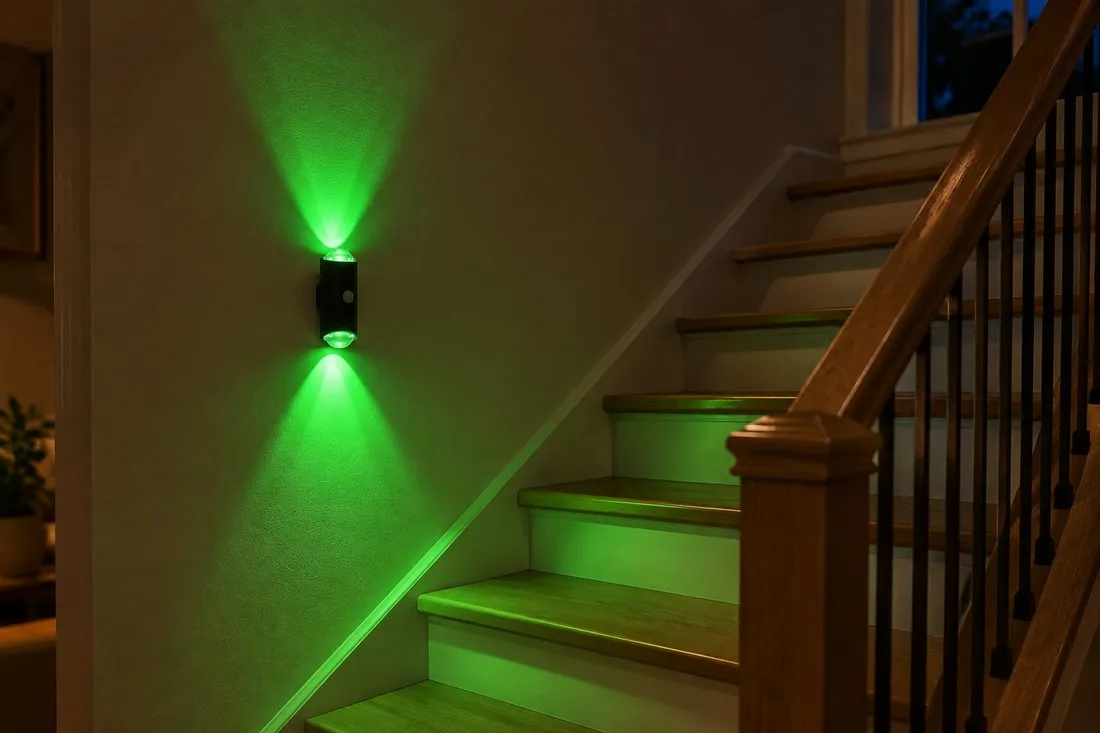
- Stairs. Mount at the top and bottom landings, angled down the steps so each tread is visible. This is the single highest-risk spot at night.
- Bedside. A light just outside the bedroom door (or on the wall beside the bed) catches the first step out of bed, which is where most trips begin.
For a home with both a hallway and a bathroom to cover, a 2-pack lets you light the whole nighttime path in one pass. For a deeper dive on placing lights by room, see our zone-by-zone lighting guide.
A Setup That Respects the Home
Rental-friendly and drill-free, the magnetic mount means no holes in the wall and no landlord approval needed. For dark walls, a hallway, or a den, the matte-black BACK motion light blends into the wall while still projecting a soft glow both up and down. The install is identical — peel, stick, snap — so the same positioning rules apply. For battery and charging expectations, see our battery life guide.
A Quick Checklist for Caregivers
- Walk the route at night first. Note every dark corner, step, and threshold between bed and bathroom.
- Mount lights 3 to 5 feet up, angled slightly down toward the walking path.
- Choose a soft, warm color so the light guides without glare.
- Test it after dark — walk the route and confirm each light triggers before the person reaches the dark spot.
- Recharge on a schedule. Since the light is USB-C, top it up when you do other monthly tasks, and it'll be ready when it's needed.
Nighttime safety doesn't require rewiring the house. A few well-placed, motion-activated lights turn the most common fall scenario into a well-lit, effortless walk. Prices and availability change on Amazon US, so see the current price on Amazon before ordering.
Make Nighttime Trips Safer Tonight
Motion-activated, rechargeable and no-drill — a safer path from bed to bathroom in under a minute of setup. See current prices on Amazon US.